


Scrap.io focuses on local business discovery with multiple map sources, filters, and developer access. The right alternative depends on whether you need broader source coverage, a different billing model, or more help qualifying Google Maps prospects.
G Maps Crawl now offers hosted jobs and saved datasets, paid contact enrichment and exports, REST, MCP, and dedicated business tools alongside its extension. This comparison covers seven options without treating cloud execution or agent access as exclusive to one vendor.
Quick Comparison
| Tool | Best For | Starting Price | Workflow | Google Maps Focus | Best Scrap.io Replacement Case |
|---|---|---|---|---|---|
| G Maps Crawl | Hosted Maps jobs, prospecting, and integrations | Free; Online $19/mo; API $15/mo; Extension $39/mo | Hosted dashboard, browser extension, REST, MCP | Dedicated | Google Maps datasets with website/review/territory tools and REST/MCP |
| Outscraper | Managed Google Maps scraping at volume | First 500 free; then per record | Cloud dashboard and API | Dedicated | Cloud Google Maps scraping with API access |
| DataForSEO | SEO and business data APIs | $50 minimum top-up; usage based | API | Business data focused | Local SEO, reviews, rankings, and business data APIs |
| Hunter | Email finding and verification | Free / $34/mo billed annually | Email finder and verifier | Adjacent | Email finding and verification from domains |
| Clay | GTM enrichment and workflow orchestration | Free / Launch from $185/mo | Enrichment workspace | Adjacent | Waterfall enrichment and GTM orchestration |
| PhantomBuster | Sales automation and lead workflows | Trial / paid automation plans | Automation templates | Adjacent | Multi-channel sales automation around scraped leads |
| Google Places API | Official Google place data integration | Usage based; free caps vary by SKU | Official API | Official | Official Google place-data integration |
Prices are in USD; monthly billing is shown unless an annual commitment is stated. Records, API requests, export credits, and infrastructure credits are different billing units. Follow each pricing link for current limits and terms.
How We Chose These Scrap.io Alternatives
For Scrap.io alternatives, I intentionally included more sales and enrichment products because local lead generation does not end when the scraper finishes. The best workflow often combines extraction, qualification, and outreach.
The criteria were:
- Clear relevance to Google Maps scraping, local business data, lead generation, or the next step after a lead list.
- Enough market visibility to be worth evaluating.
- Public product pages, docs, or pricing pages that make the workflow understandable.
- A real reason to choose the product over Scrap.io: simpler exports, better Google Maps focus, API-first access, broader automation, stronger enrichment, or enterprise infrastructure.
1. G Maps Crawl
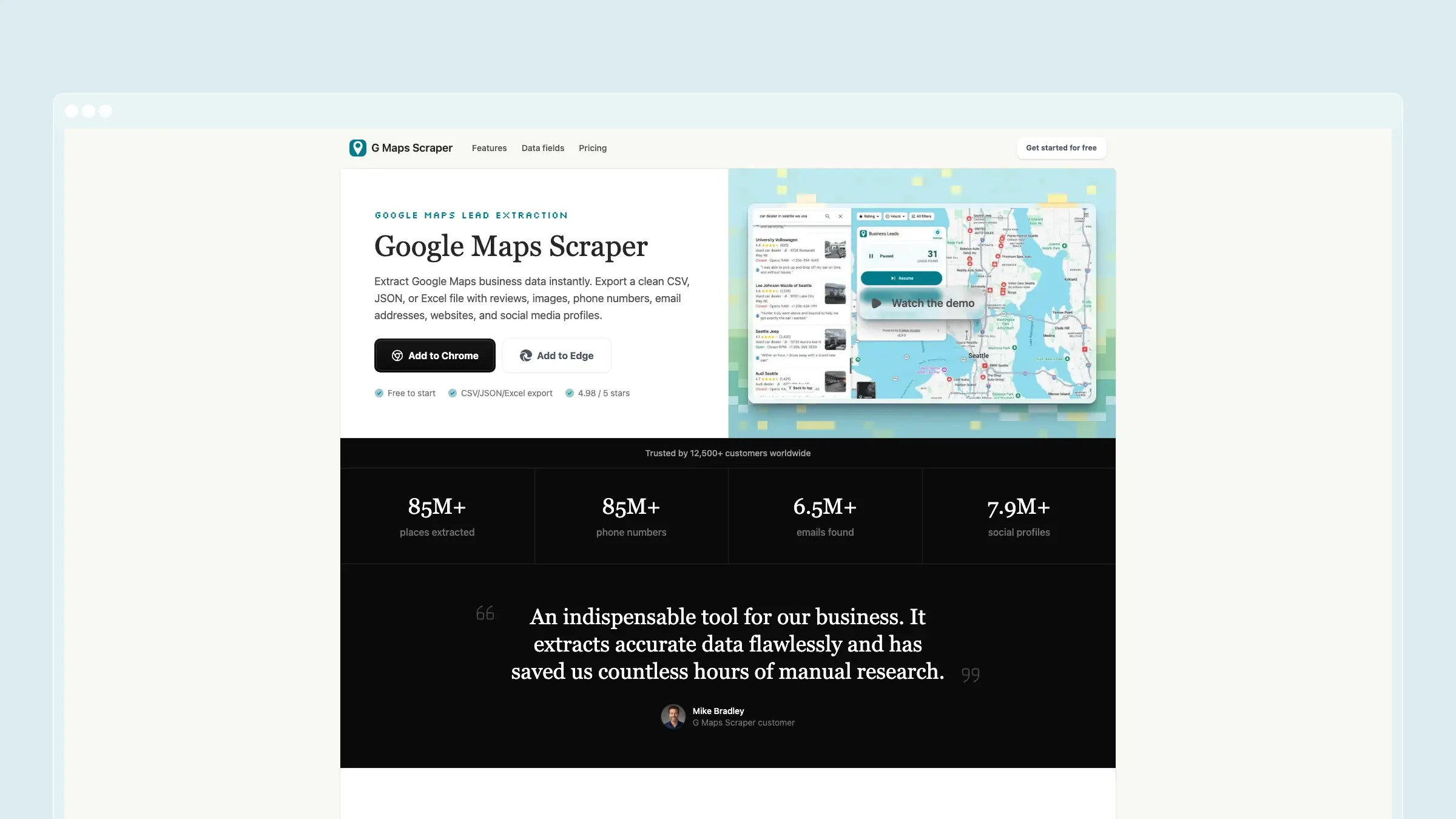
G Maps Crawl is a Scrap.io alternative for teams focused on Google Maps. Use hosted multi-keyword jobs and saved datasets, then qualify businesses by website presence, review counts, or sales territory. REST and MCP support the same business-search use case in applications and agents.
What G Maps Crawl includes:
- Hosted Online jobs and saved datasets. Submit multiple keywords within your plan's task limit. Jobs continue after you close the browser, and results stay available in your workspace.
- Contact enrichment and flexible exports. Paid Online plans add email and social discovery from business websites, selectable export fields, and CSV, Excel, or JSON files. Contact availability depends on the source.
- Browser collection. The separate Chrome and Edge Extension supports searches and file exports from a browser workflow.
- Synchronous REST search. The Search API returns up to 20 businesses per request as JSON in the same response, without job polling. Optional
extra: truerequests available website contact enrichment. Test keys return simulated data without live usage. - MCP and an agent Skill. The MCP server and Google Maps data Skill connect business search to compatible agents. MCP uses your API allowance and returns structured results; it does not provide a file-export or email-sending tool.
- Prospect qualification tools. The website presence finder classifies listing website links, review opportunities filters observed review counts and supports peer comparison when the sample allows it, and the sales territory builder helps qualify businesses and exclude existing accounts.
The business tools show evidence and keep unknown data separate from matches. A missing listing website link does not prove that no website exists. Their public previews inspect up to 100 businesses and display up to 20 rows; adjusting filters reuses the sample. Public previews share up to three accepted requests per UTC day, subject to admission controls.
Search results can include business names, categories, addresses, coordinates, phones, websites, hours, ratings, review counts, and available review and photo data. Online and API do not support standalone review or photo jobs.
Where Scrap.io may fit better: Scrap.io advertises Google, Apple, and Bing Maps coverage and map-based filtering. G Maps Crawl focuses on Google Maps. Choose based on source coverage and the filters you actually need; both offer programmatic and agent access.
Pricing by product:
- Online: Free includes 1,000 records/month and up to two keywords per task, without contact enrichment or file exports. Lite is $19/month for 20,000 records and up to five keywords per task, including enrichment and CSV/Excel/JSON exports. Higher plans increase the record and keyword allowances.
- Extension: Free includes 1,000 records/month. Professional is $39/month for 100,000; Business is $99/month for 500,000.
- API and MCP: Free includes 20 requests/month. Basic is $15/month for 1,000; Professional is $65/month for 5,000. Paid overage and higher-volume plans are listed on the pricing page.
Online, Extension, and API subscriptions have separate allowances; MCP shares API usage. Online counts accepted unique records, while each successful API search page counts as one request, including an empty page. A request can return fewer than 20 businesses.
Best for: Google Maps-focused prospecting teams that want saved hosted jobs, qualification evidence, enriched exports, or REST/MCP.
The tradeoff: You get a dedicated Maps collection and qualification workflow. Choose Online, Extension, or API according to how you want to run searches and use the results.
2. Outscraper
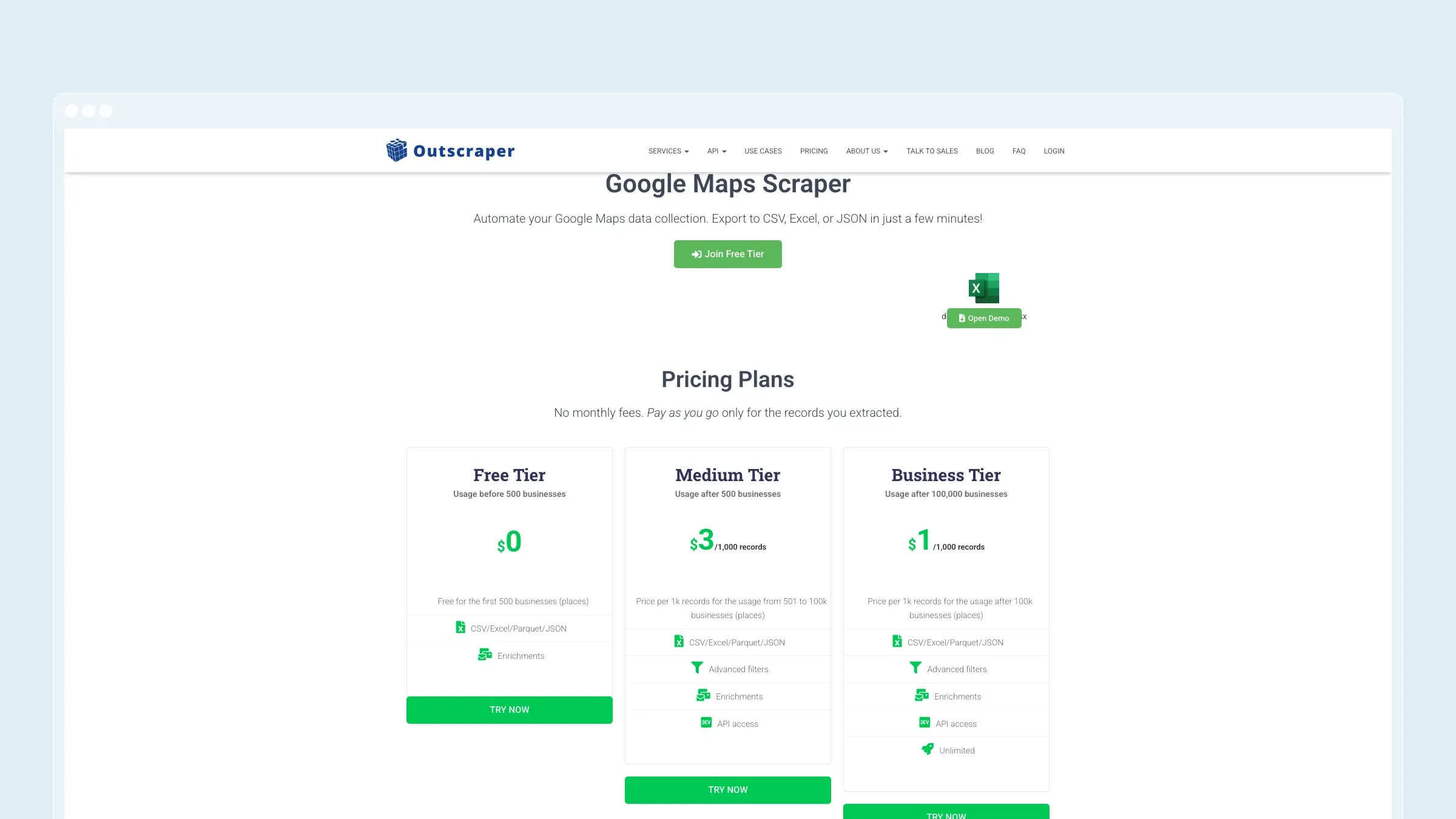
Outscraper is a managed Google Maps scraping product with dashboard runs, API access, real-time extraction, emails and contacts, and CSV, Excel, or JSON exports.
What Outscraper does well:
- Cloud execution for teams that do not want browser-based scraping.
- Dedicated Google Maps, reviews, photos, and place data workflows.
- API access for recurring internal pipelines.
- Pay-per-record pricing that can suit spiky usage.
- Contact enrichment options for business listings.
Where it is weaker than Scrap.io: Compared with Scrap.io, Outscraper has its own opinionated workflow and data model. Check whether its fields, export limits, API limits, and pricing shape match the way your team actually builds lead lists.
Pricing: The first 500 businesses are free. Google Maps collection then costs $3 per 1,000 records from 501 to 100,000 businesses and $1 per 1,000 above that. Review enrichment and other services may have separate charges. See official pricing.
Best for: Teams that want cloud-based Google Maps extraction, recurring jobs, and API access without managing scraping infrastructure.
The tradeoff: Outscraper is easier than general scraping platforms for Maps, but less flexible for arbitrary websites.
3. DataForSEO
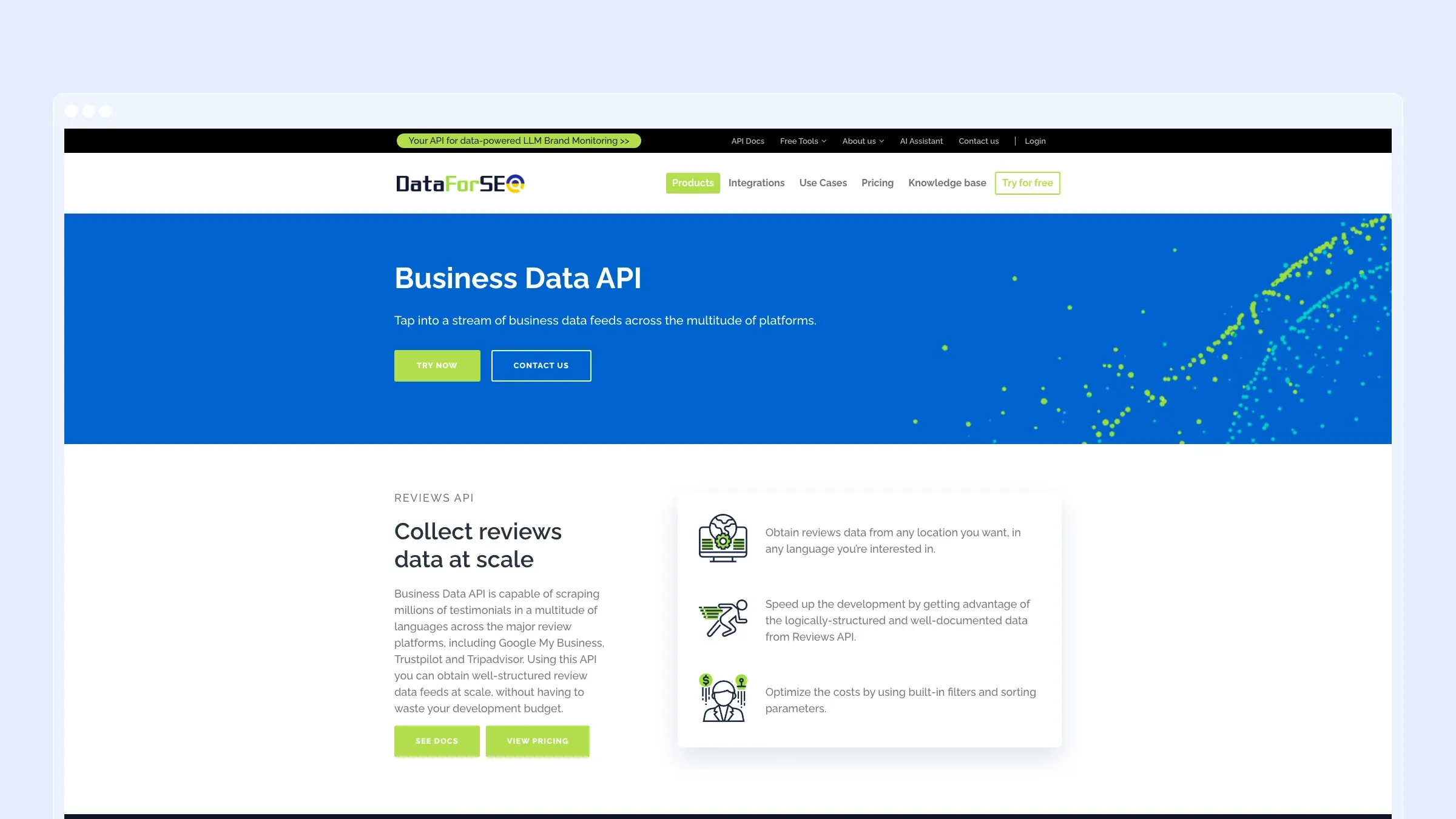
DataForSEO is an API vendor for SEO, SERP, keyword, backlinks, ecommerce, app, and business data. Its Business Data API includes Google Business profiles, Google Reviews, and other review sources.
What DataForSEO does well:
- Structured APIs with predictable request and response patterns.
- Useful for local SEO, rankings, reviews, and analytics workflows.
- Broad SEO API catalog beyond Google Maps.
- Clear usage-based pricing pages.
- Strong developer documentation and payload consistency.
Where it is weaker than Scrap.io: Compared with Scrap.io, DataForSEO has its own opinionated workflow and data model. Check whether its fields, export limits, API limits, and pricing shape match the way your team actually builds lead lists.
Pricing: Business Data API uses usage-based billing, with endpoint and priority affecting the rate. The minimum account payment is $50. Budget separately for business profiles and reviews rather than treating a profile price as the cost of every endpoint. See official pricing.
Best for: SEO software teams, agencies, data teams, and developers building local ranking, review, or analytics products.
The tradeoff: DataForSEO gives you APIs, not a finished prospecting app. Non-technical users will usually need a simpler interface.
4. Hunter
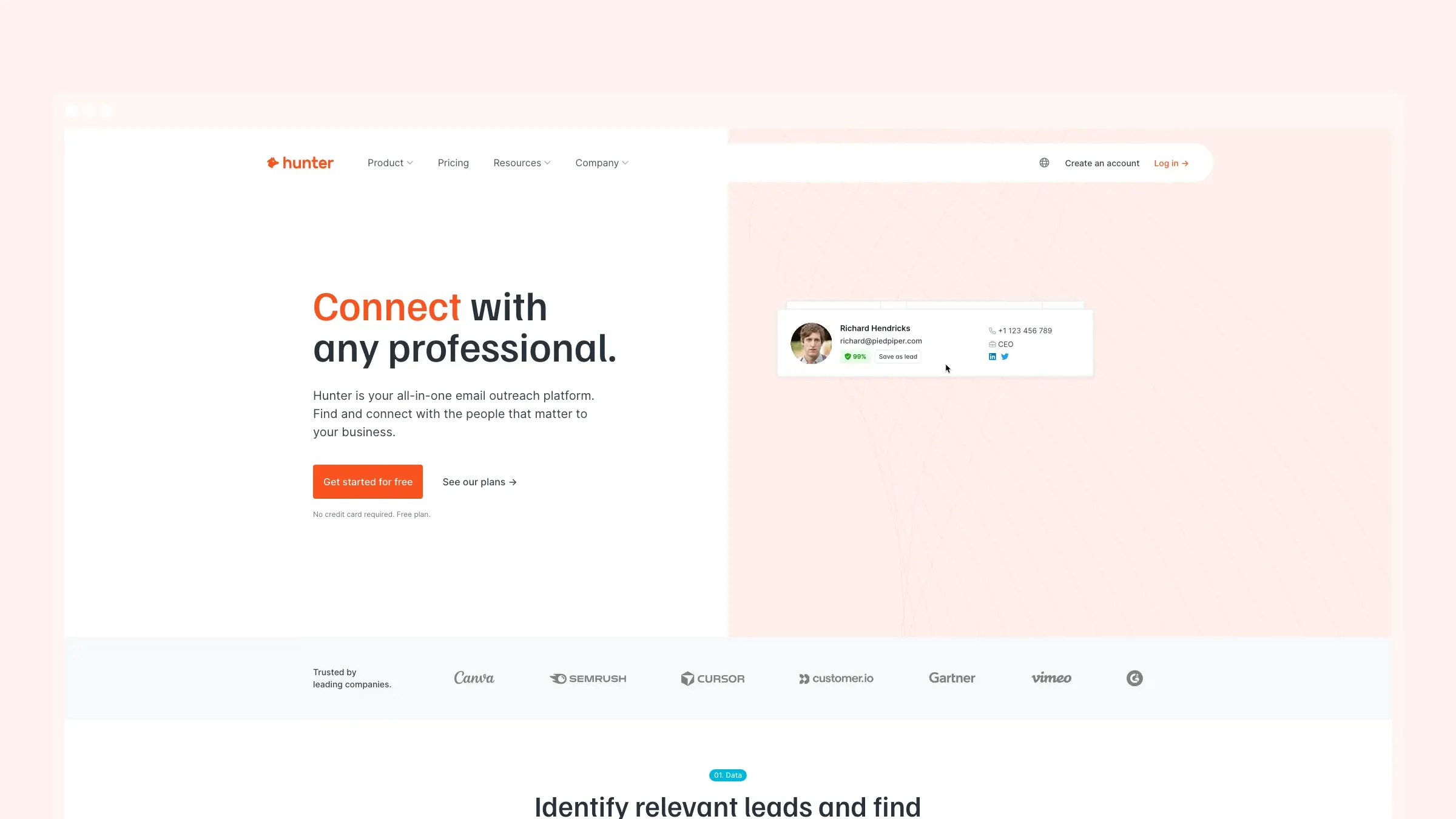
Hunter focuses on finding and verifying professional email addresses through domain search, email finder, verifier, campaigns, and API workflows.
What Hunter does well:
- Simple email discovery from domains and names.
- Email verification to reduce bounce risk.
- Campaign and API options for outbound teams.
- Useful enrichment layer for local business websites.
- Transparent credit-based pricing.
Where it is weaker than Scrap.io: Compared with Scrap.io, Hunter is less focused on finished Google Maps lead exports. It can be stronger for custom scraping, enrichment, or automation, but it may require more setup before you have a clean prospecting list.
Pricing: Free includes 50 credits/month. The pricing page lists Starter from $34/month when billed annually. Monthly billing and API-only Data Platform options have different pricing; compare the credit allowance and email workflow you need. See official pricing.
Best for: Teams that already have business websites or domains and need verified emails for outreach.
The tradeoff: Hunter enriches contact data. It does not discover local businesses from Google Maps by itself.
5. Clay
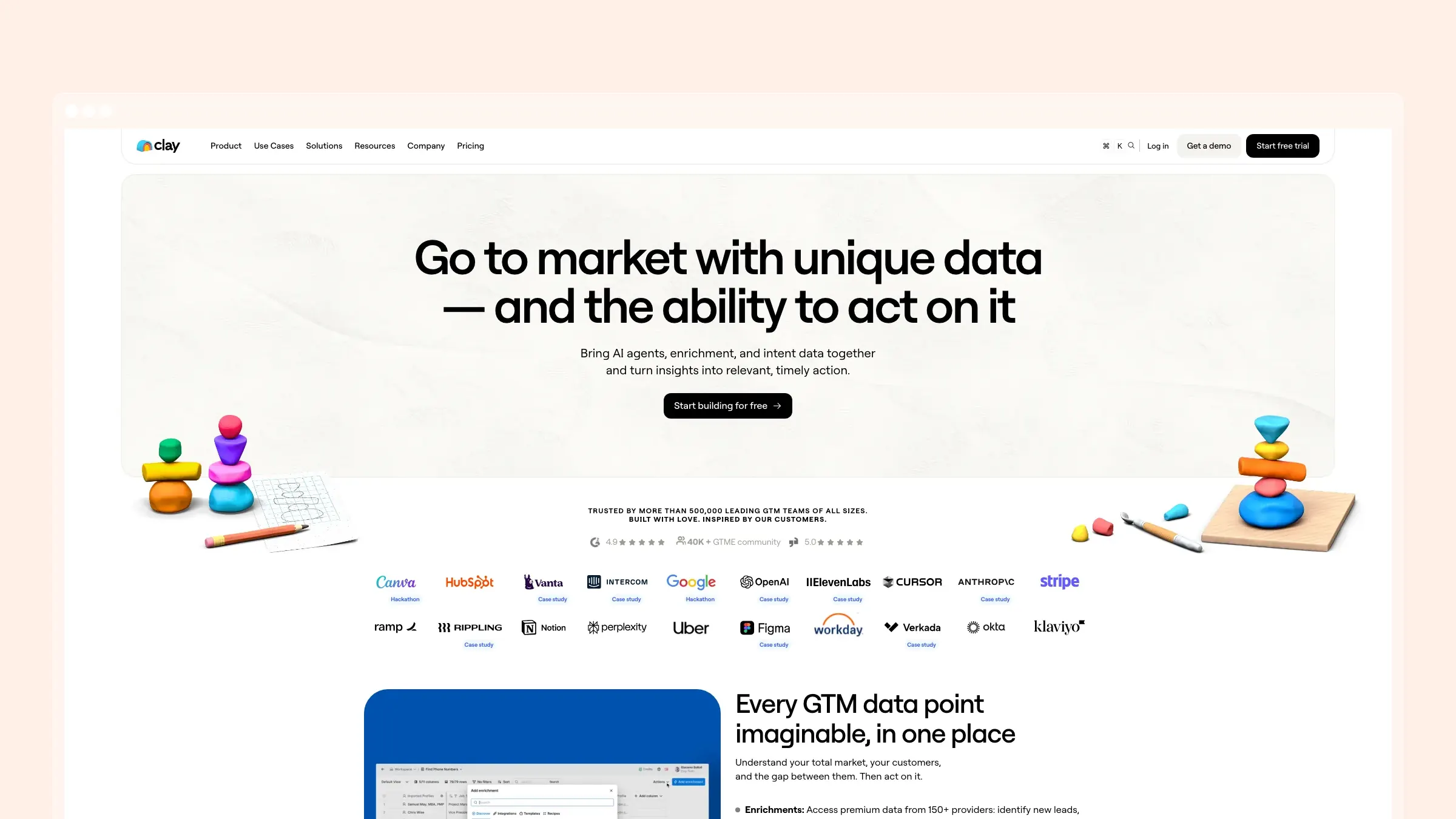
Clay is a GTM orchestration and enrichment workspace that combines data providers, AI research, waterfall enrichment, tables, sequencing, and integrations.
What Clay does well:
- Powerful enrichment workflows across many data providers.
- AI-assisted research and qualification.
- Waterfall enrichment can improve contact and company coverage.
- Flexible table-based workflow for GTM operations.
- Great for turning raw lists into qualified account data.
Where it is weaker than Scrap.io: Compared with Scrap.io, Clay is less focused on finished Google Maps lead exports. It can be stronger for custom scraping, enrichment, or automation, but it may require more setup before you have a clean prospecting list.
Pricing: A free plan is available. Launch starts at $185/month and Growth at $495/month with monthly billing. Data Credits and Actions are separate limits; provider and workflow choices affect consumption. See official pricing.
Best for: Growth, revenue operations, and sales teams that enrich and qualify accounts from multiple sources.
The tradeoff: Clay is best after you have a list. It is not the most direct way to scrape Google Maps from scratch.
6. PhantomBuster
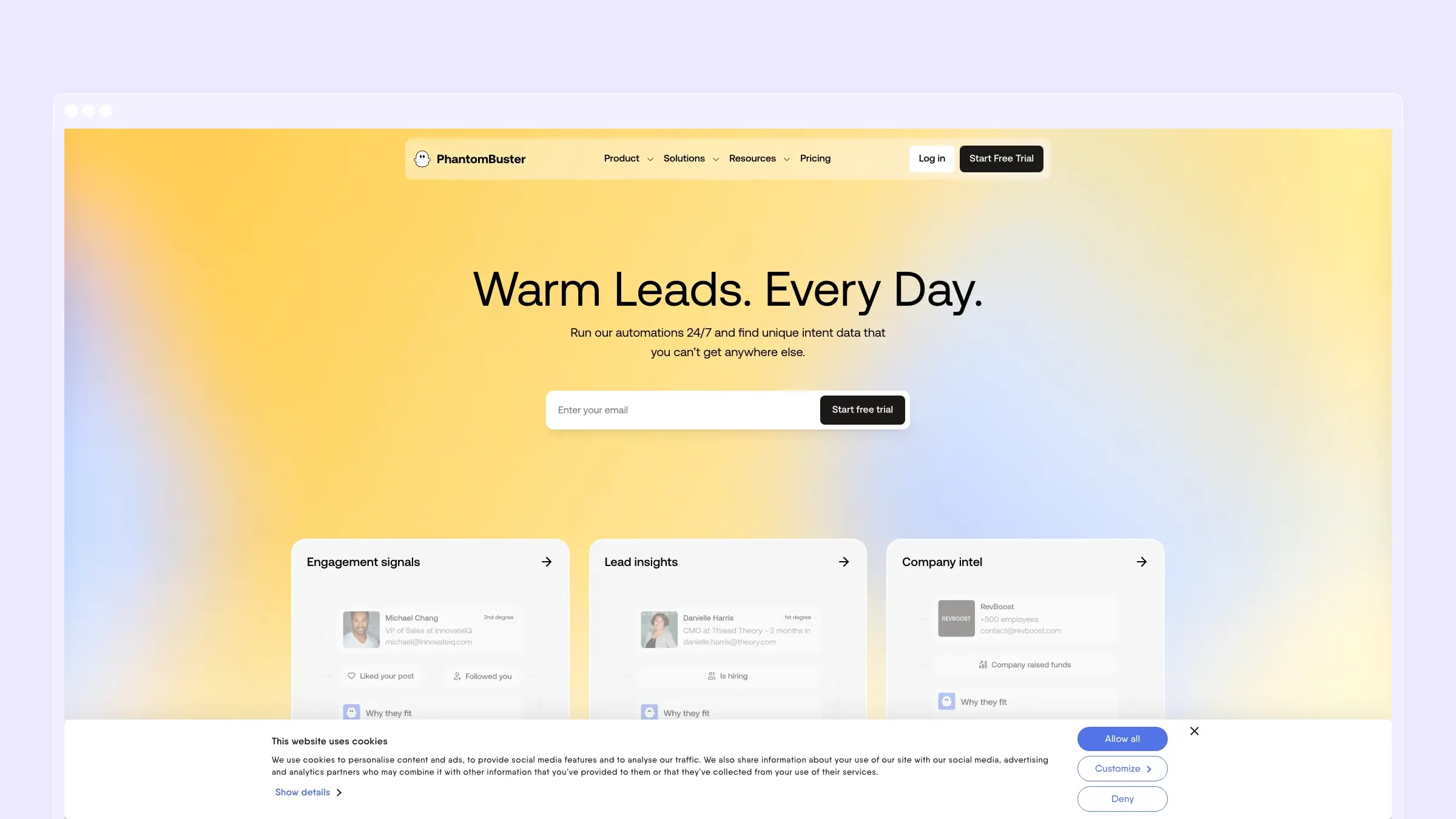
PhantomBuster is an automation platform for extracting and enriching lead data across channels such as LinkedIn, Google, social networks, and sales workflows.
What PhantomBuster does well:
- Large library of ready-made automation templates.
- Useful for lead sourcing and enrichment beyond Google Maps.
- Can chain automations into outbound workflows.
- Good fit for sales teams that already work across LinkedIn and web data.
- No need to build every workflow from scratch.
Where it is weaker than Scrap.io: Compared with Scrap.io, PhantomBuster is less focused on finished Google Maps lead exports. It can be stronger for custom scraping, enrichment, or automation, but it may require more setup before you have a clean prospecting list.
Pricing: A trial and paid automation plans are available. Compare execution time, automation slots, and any contact or AI credits; these allowances are not directly comparable with Maps records. See official pricing.
Best for: Growth teams and sales operators that want automated prospecting workflows across multiple channels.
The tradeoff: PhantomBuster is broader than map scraping, so Google Maps lead quality and exports may require more workflow design.
7. Google Places API
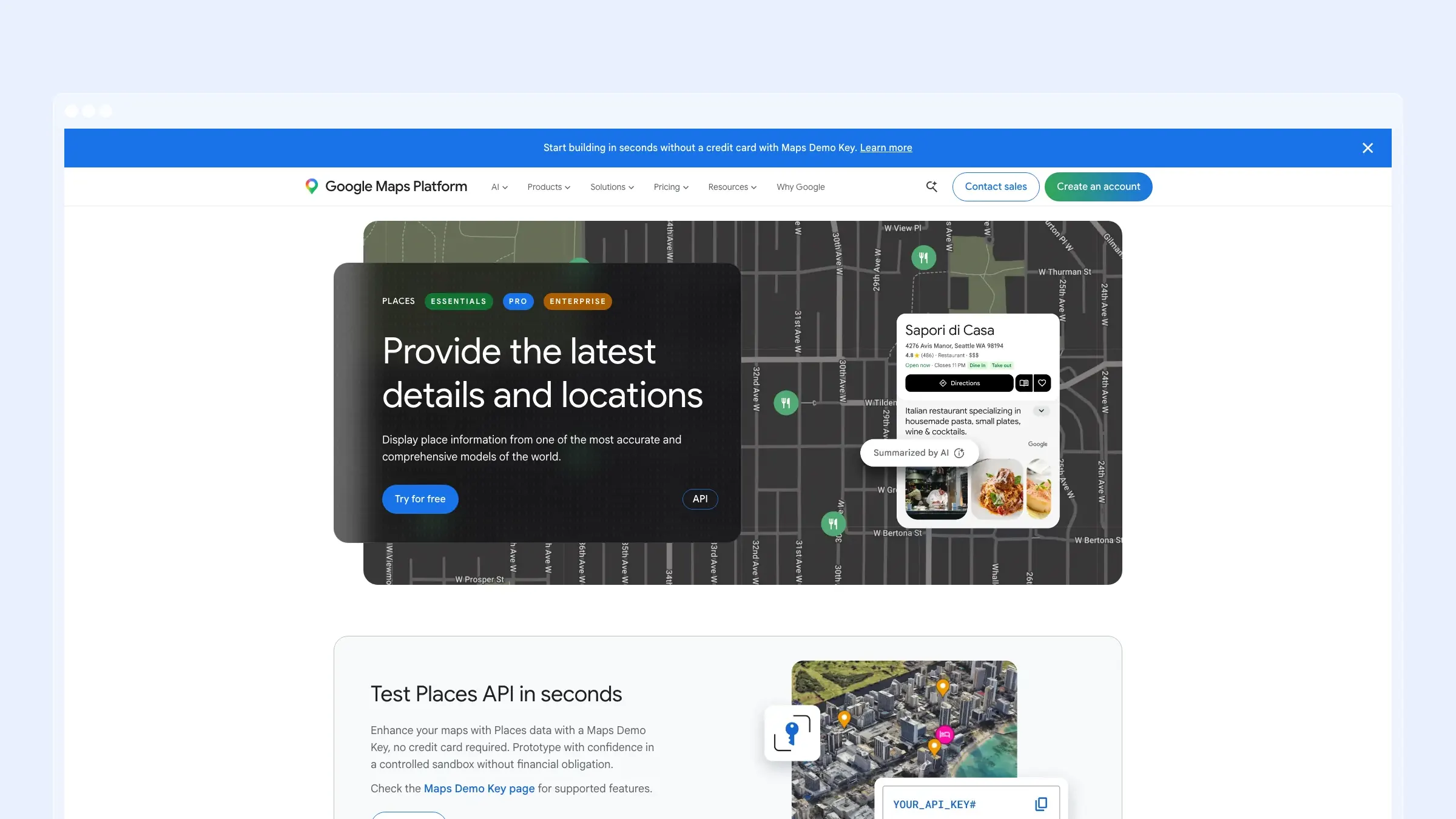
Google Places API is the official way to build applications on Google place data. It supports place search, place details, photos, and related Maps Platform workflows.
What Google Places API does well:
- Official Google API with documentation and platform support.
- Best fit for applications that need compliant place lookup.
- Place Details, Text Search, Nearby Search, and other endpoints.
- Predictable billing through Google Cloud.
- Works naturally inside apps already using Google Maps Platform.
Where it is weaker than Scrap.io: Compared with Scrap.io, Google Places API has its own opinionated workflow and data model. Check whether its fields, export limits, API limits, and pricing shape match the way your team actually builds lead lists.
Pricing: Google bills by SKU, usage volume, and the fields requested, with free caps on eligible SKUs. Estimate search and detail calls together using the official pricing list rather than a single flat per-business price. See official pricing.
Best for: Product teams building apps, directories, maps, and internal tools that need official Google place data.
The tradeoff: It is not a scraping tool and it will not provide every field or enrichment a sales team expects from a lead scraper.
When You Should Stay With Scrap.io
Stay with Scrap.io if its multi-map coverage and geographic filters fit your prospecting process. G Maps Crawl also offers hosted jobs, REST, and MCP; compare source coverage, filters, and allowances rather than assuming one product is browser-only.
No alternatives list should pretend that the seed product is never the right choice. Scrap.io may still be the best fit if its current workflow, pricing model, integrations, and data coverage already match your team.
Which Scrap.io Alternative Should You Choose?
Choose G Maps Crawl if Google Maps is your source and you want hosted datasets, website/review/territory qualification, paid enriched exports, or REST/MCP alongside an optional extension.
Choose Outscraper if its pay-per-record billing or separate Maps data services fit your workload better than a monthly record allowance.
Choose DataForSEO if you are building a local SEO, review monitoring, or analytics product with structured APIs.
Choose Hunter if you already have domains and need verified email addresses.
Choose Clay if you need enrichment, AI research, and GTM orchestration after list building.
Choose PhantomBuster if you want lead sourcing automations that span LinkedIn, Google, social, and outbound workflows.
Choose Google Places API if you need official Google place data inside an application.
Recommendation
Choose G Maps Crawl for Google Maps-focused hosted collection, saved datasets, paid enriched exports, and website, review, or territory qualification. REST/MCP and the browser Extension cover integration and manual collection needs.
Keep Scrap.io when multi-map coverage or its geographic filters are decisive. Outscraper offers pay-per-record Maps collection, DataForSEO covers broader local SEO data, Hunter specializes in email workflows, Clay adds provider-based enrichment, PhantomBuster adds automation, and Google Places API supports official integrations.


